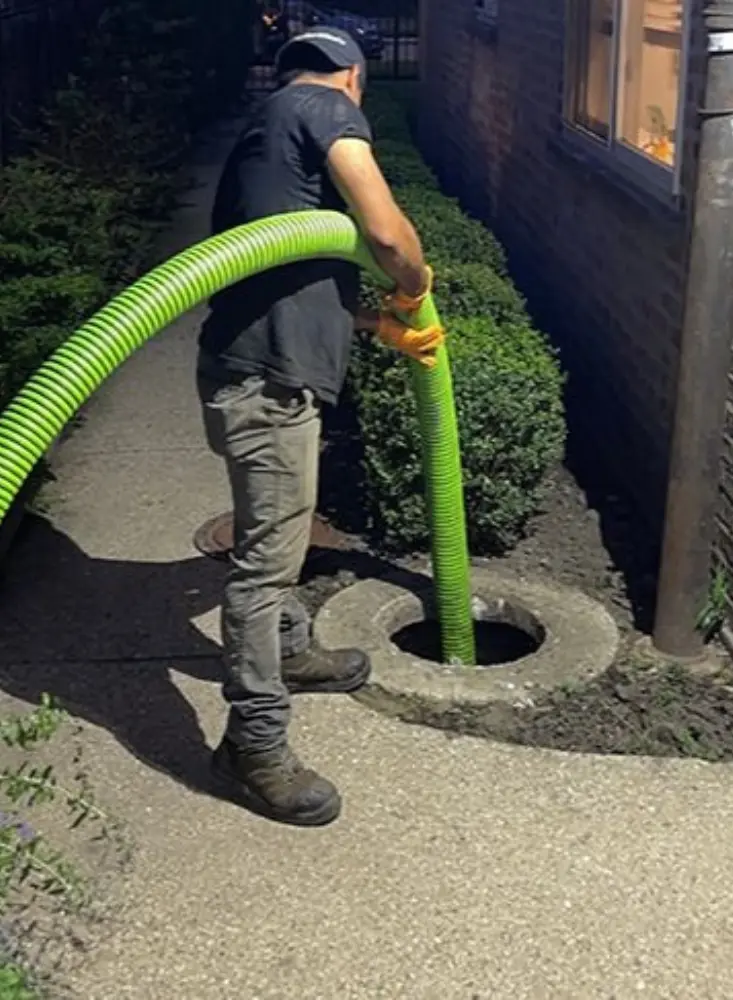
Sewer Line Repair in Vista CA — Camera Inspection Before Any Digging
Vista’s sewer system is owned by the city. Your sewer lateral is owned by you.
Vista’s sewer infrastructure has a documented history of failure 27 spills over five years, iron pipes failing at half their expected lifespan, and clay laterals in downtown 92083 fighting root intrusion for decades. Your residential sewer line shares the same age profile as the city’s infrastructure. We diagnose with CCTV camera inspection first, then repair using the least invasive method that solves the problem permanently.
✅ Same-Day Detection | ✅ CA Licensed | ✅ Serving 92081, 92082, 92083, 92084 | ✅ CCTV Camera Inspection
One Pipe, Two Owners — What Vista’s 215 Miles of Sewer Lines Mean for Your Home
The City of Vista owns and operates more than 215 miles of sewer collection pipelines, with the Buena Sanitation District managing an additional 101 miles serving Shadowridge and surrounding areas. Every one of those miles connects somewhere to a private lateral the pipe section running from your home to the city main and under Vista municipal code that connection point and everything on your side of it is your responsibility, not the city’s.
This ownership split matters because it explains why sewer problems hit homeowners without warning. The city’s infrastructure has a documented and serious track record of failure. City records show 27 sewage spills over a five-year period, and iron pipes installed in the 1980s designed to last 50 years began failing in just over half that time. A single line failure near Buena Vista Lagoon released more than 7.3 million gallons of effluent and cost the city over $150,000 to repair just 850 feet of pipe on South Melrose Drive. The residential sewer laterals connecting Vista homes to those city mains share the same installation era, the same clay pipe vulnerabilities, and the same hard inland water and soil conditions that drove every one of those municipal failures. Pre-1990 homes throughout 92083 and 92084 are not facing a hypothetical risk they are living inside it right now, on the private side of a pipe the city has no obligation to maintain.
Vista’s Wet-Dry Cycle Is the Real Reason Your Sewer Line Is Failing
Most sewer line replacement Vista homeowners eventually need traces back to one mechanism repeating year after year: Southern California’s rainy season followed by its long dry summer.
Vista receives most of its annual rainfall between November and March. When that rain saturates Vista’s clay-heavy soil, the clay expands significantly a well-documented characteristic of expansive soils found throughout inland San Diego County. That expansion applies lateral pressure to every buried pipe in its path, and rigid clay or cast iron sewer laterals are particularly vulnerable to separating at the joints under that pressure. Then summer arrives. Vista’s dry season runs roughly April through October with little to no rainfall, and the same clay soil that expanded in winter contracts sharply as it dries out. Pipes that were level when installed settle unevenly as the soil pulls away beneath them, creating low spots plumbers call them bellies where debris and wastewater collect instead of flowing through.
This expand-contract cycle repeats every single year. It does not damage a sewer line once and then stop. It works on the same joints, the same low spots, and the same weak points every winter and every summer, which is exactly why sewer lines vista CA homeowners installed decades ago are now reaching failure simultaneously across entire neighborhoods rather than randomly one house at a time.
How We Diagnose Before We Dig
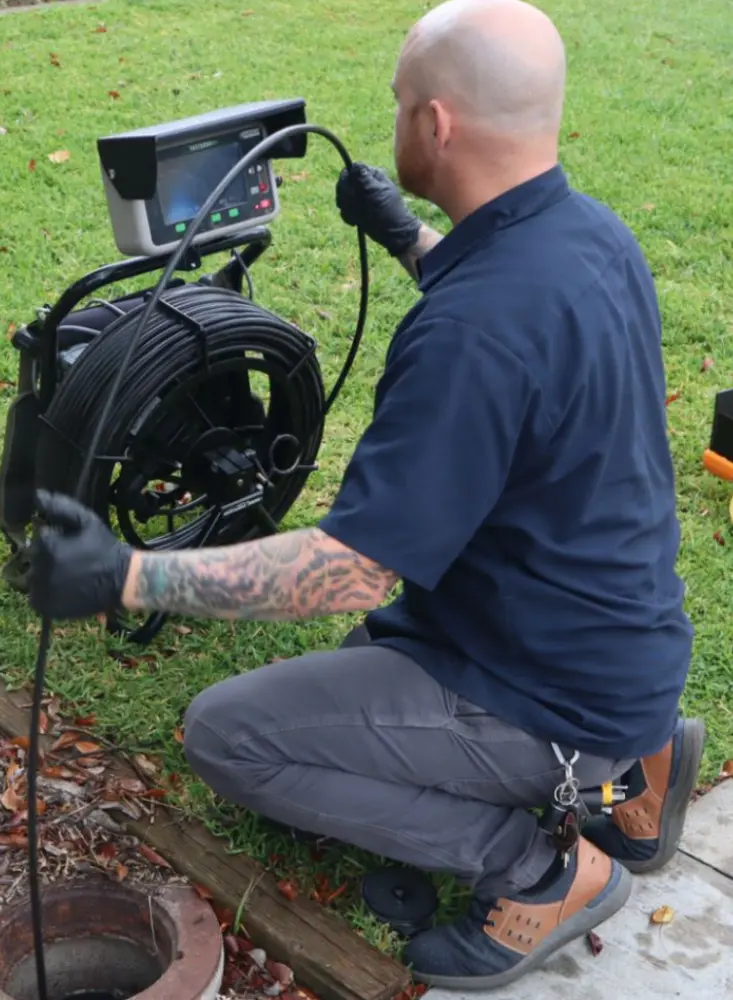
We do not guess at sewer problems and we do not recommend excavation as a first option. Every Vista sewer line repair begins with a CCTV camera inspection fed through your cleanout, giving us a real-time interior view of the pipe. This identifies exactly what we are dealing with root intrusion, a cracked or offset joint from soil movement, a belly holding standing water, or a localized collapse and pinpoints the depth and location of the defect before any tool other than the camera touches your property.
What we find determines the repair, not the other way around. A root intrusion with otherwise sound pipe walls often clears with targeted hydro-jetting and root cutting. A cracked or offset joint from clay soil movement may qualify for trenchless lining. A pipe that has settled into multiple low-lying bellies from years of the expand-contract cycle sometimes requires pipe bursting to restore correct grade. We explain what the camera shows, what caused it, and what the repair options are before recommending anything and for sewer line replacement Vista homeowners ultimately decide on, we walk through trenchless versus traditional excavation honestly based on what your specific pipe condition supports.
Mature Landscaping Is the Other Half of the Problem
Vista’s established neighborhoods particularly older sections of downtown Vista near 92083 and tree-lined streets throughout the Melrose District are known for mature trees that have had 40 to 60 years to grow root systems searching for water. During Vista’s long dry season those roots find the most reliable moisture source available underground: a sewer lateral carrying wastewater every single day. Roots exploit any crack or joint separation already caused by the clay soil’s seasonal movement, grow inside the pipe, and expand until the restriction becomes a complete blockage.
This is why a slow drain that suddenly affects every fixture in the house at once is rarely a coincidence. It usually means root intrusion has finally closed off what was already a narrowing channel from years of soil stress on the same pipe joint.
Signs Your Vista Sewer Lateral Needs Professional Attention
Because your sewer line is buried, it broadcasts warning signs long before raw sewage actually surfaces if you know what to watch for. Multiple slow drains throughout the home at the same time means the problem is in the shared main line, not one isolated fixture. Toilets that gurgle when the washing machine drains are responding to air pressure changes in a partially blocked main line. Sewage odor indoors with no visible source means the sealed system has been breached somewhere and gas is escaping into your living space. Wet patches or unusually green grass above where your lateral runs especially noticeable during Vista’s dry months when the rest of the lawn is stressed point to wastewater leaking underground. Sewage backing up into the lowest fixtures in your home, typically a ground-floor shower or toilet, confirms a confirmed blockage or break in the main line connecting your home to the city system.
Any one of these on its own warrants a camera inspection. Multiple signs together mean the situation has likely progressed past what snaking alone can resolve.
Trenchless Sewer Line Replacement in Vista — Less Disruption, Same Result
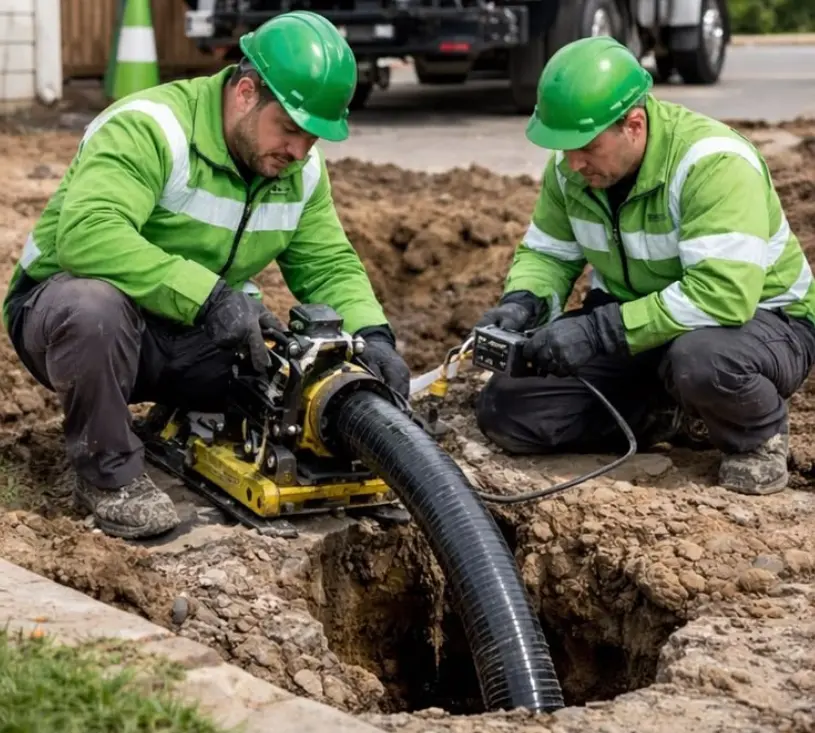
Traditional sewer replacement means excavating a trench the full length of the damaged section through your yard, sometimes your driveway, often landscaping that took years to establish. Trenchless methods eliminate most of that disruption while restoring the same full flow.
Pipe bursting pulls a new pipe through the existing line while simultaneously fracturing the old pipe outward, achieving a complete replacement through small access points rather than a continuous trench. Cured-in-place lining inserts a resin-saturated sleeve into the existing pipe and cures it into a new structural pipe within the old one appropriate when the existing pipe alignment is sound but the material itself has deteriorated from decades of clay soil stress and hard water exposure. Both methods restore full flow without digging up the yard, driveway, or landscaping that traditional excavation would require, and both are well suited to Vista’s expansive clay soil where disturbed, backfilled ground does not always settle predictably the way undisturbed soil does.